
What is bakhoor?
In short
Bakhoor is a traditional incense: wood chips, often agarwood (oud) or sandalwood, soaked in fragrant oils and blended with resins and other aromatics. Warmed on charcoal or an electric burner, it releases a perfumed smoke that scents the home, clothes and hair and welcomes guests, from the Arabian Peninsula to Sudan, the Horn of Africa and West Africa.
Before perfume came in bottles, it came as smoke. In many homes it still does, from the Arabian Peninsula to Sudan, from the Horn of Africa to Senegal: a burner carried from room to room before guests arrive, a scarf held over the smoke, a last pass through the hair before going out. That smoke is bakhoor.
Here is what it is made of, where the word comes from, how to burn it at home, and why its trace stays on fabric and hair long after the room has cleared.
What does bakhoor mean?
The word comes from the Arabic bakhūr, incense. You will also find it written bukhoor, bakhour or bukhur: the same thing, transliterated in different ways.
A small curiosity: one of Oman’s UNESCO World Heritage sites, the Land of Frankincense, is also called ʿArḍ al-Bakhūr in Arabic, the land of incense.
One ritual, many names
Bakhoor is the Arabic name, but the gesture belongs to a much wider map. Every place has its own recipes, its own burners and its own words.
- Arabian Peninsula. Bakhoor is burned in a mabkhara. In the Gulf it is passed among guests; in Yemen it is also made at home, with rock sugar and rosewater.
- Sudan. Bakhoor is made at home too, from local woods, aromatic oils and perfumes. The most precious kind is made with sandalwood.
- Horn of Africa. In Somali homes it is uunsi, burned in a dabqaad, a clay burner also used in Djibouti and Ethiopia.
- West Africa. In Senegal it is thiouraye, also written churray in the Gambia: women blend wood shavings, fragrant herbs and resins with sandalwood, musk, oud or amber.
What is bakhoor made of?
Bakhoor is a category, not a single recipe. Every blend, and often every family, has its own. Three elements come back almost every time.
Wood.
Many blends are built on agarwood, which in Arabic is simply called oud: ʿūd means “wood”. Agarwood forms when an Aquilaria tree is wounded: as a stress response, the tree deposits a dark, fragrant resin in its heartwood. It is rare by nature: even in plantations, only about 7 to 10% of trees end up forming resin, and every Aquilaria species is protected under CITES. The trees grow in South and Southeast Asia, which is why bakhoor has always been a story of trade routes. It is not the only wood: sandalwood, prized above all in Sudan, and other aromatic woods are just as traditional.
Oil.
The chips are soaked in perfumed oils until they absorb them: rose, sandalwood, musk, amber. Oils give each blend its character, floral, sweet, spicy or deeply woody, and soften the raw intensity of oud.
Resin.
Resins such as frankincense, myrrh or benzoin add depth and help hold the blend together. Some recipes add sweetness too, often with sugar: an old Emirati recipe mixes shredded oud with musk, amber and sugar, then leaves it to dry.
The classic form is wood chips soaked in oils. Then there is mamoul, also written maamoul: a moister, softer blend, worked into a paste and shaped into small pieces. Some bakhoor is also sold as powder.

Perfume began as smoke
The word perfume itself comes from the Latin per fumum, through smoke. Long before alcohol and spray bottles, scent travelled this way: burned, carried through rooms, held in fabric.
The materials travelled too. Frankincense from southern Arabia was one of the most important luxury goods of the ancient world, and agarwood was prized for centuries from ancient Egypt to India, Greece and Rome. Bakhoor is what that history smells like today.
How to burn bakhoor, step by step

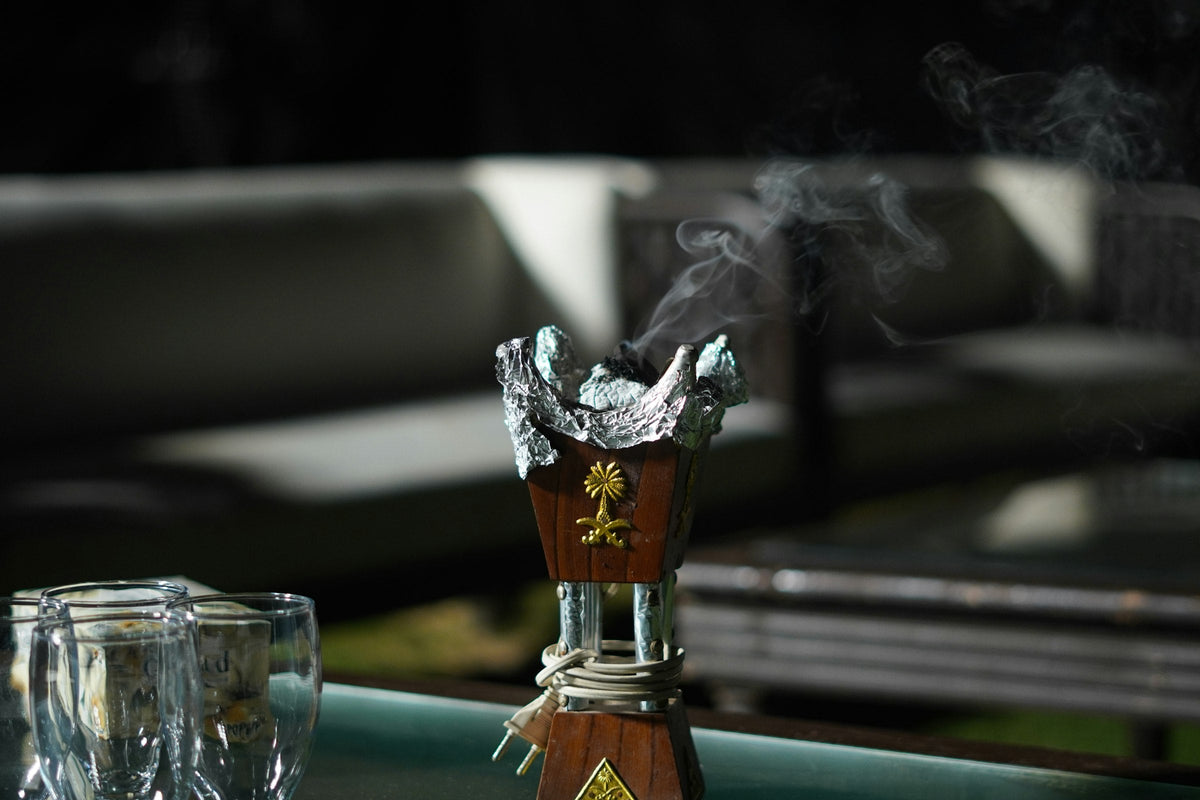
- Choose your burner. A traditional burner, the mabkhara (in Somali homes, the dabqaad), holds a piece of lit charcoal. An electric burner warms the bakhoor with no flame and no charcoal: simpler indoors.
- Prepare the heat. Light a charcoal disc by an open window and wait until it glows and turns grey with ash. With an electric burner, simply switch it on.
- Add a small piece. One chip, or a fingertip of powder, is enough. You can always add more.
- Let the smoke rise. Walk the burner slowly through the room, or leave it in place and let the scent spread.
- Scent your fabrics. Hold a scarf, a coat or the hem of a dress above the burner for a few moments, at a safe distance from the heat.
- Finish with the hair. Traditionally the last touch: let the smoke pass beneath the lengths, briefly and from a distance. Warm smoke, never heat.
Always set the burner on a heat-proof surface, keep it away from curtains, children and pets, and never leave it unattended.
Home, clothes, hair
Wherever it is burned, bakhoor belongs to hospitality. In the Gulf, the mabkhara moves from one room to another before guests arrive, and once they are seated a burner is passed around the majlis so each person can scent their hair, clothing and hands, a welcome as natural as coffee and dates.
In Somali homes, uunsi is lit after meals, in the evening and when visitors are expected, and it freshens clothes. In Sudan, wood bakhoor scents the house every day and welcomes guests over coffee, while sandalwood is kept for weddings and births.
In the Emirates, it belongs to ordinary days and to the most important ones: Friday gatherings, Eid mornings, family visits, weddings. One custom there often surprises visitors: sometimes the bakhoor comes out just as guests are getting ready to leave, and it does not necessarily mean the visit is over.
Home before the guests. Clothes over the smoke. Hair, the last touch.
Why the scent stays on fabric and hair
In the air, smoke clears quickly. Fibres are different: wool, silk and hair hold the scent and, unlike skin, do not warm it, so it fades far more slowly. Hair adds movement, releasing the scent again every time you turn your head.
We explain the science in detail in Why does perfume last longer on your hair?
Bakhoor, oud and incense sticks: what is the difference?
- Oud is the agarwood itself: lightly processed chips with an earthy scent, or the oil distilled from them, dehn al oud.
- Bakhoor is a blend: wood, often oud or sandalwood, soaked in perfumed oils and mixed with resins, sugar or other aromatics. It does not burn on its own: it is warmed on charcoal or on an electric burner.
- Incense sticks are another format: a scented paste on a stick, lit directly at the tip.
Burning bakhoor with care
Any smoke indoors affects the air you breathe. The American Lung Association notes that burning incense releases fine particles that can irritate the airways, and recommends shorter, less frequent sessions and good ventilation. In practice: burn near an open window, keep sessions short, air the room afterwards, and if someone at home has asthma or another lung condition, burn it while they are away.

The warmth of bakhoor, without the flame
Bakhoor asks for fire and time. Some moments allow both. Others, a morning, an office, a journey, call for something you can carry.
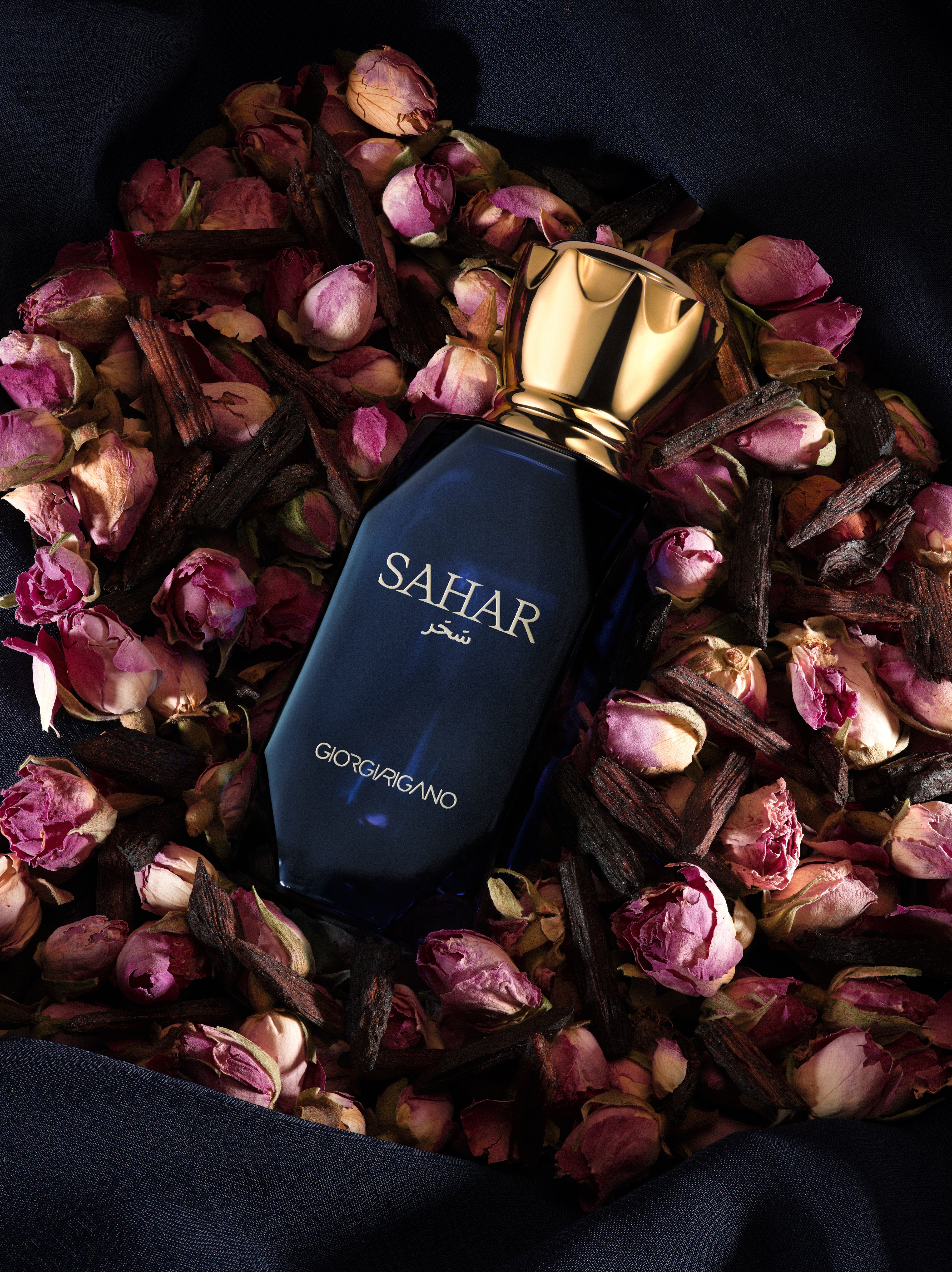
Sahar holds the warmth of bakhoor in a Hair & Body Essence: oud in the heart, amber and benzoin in the base. Sahar on your hair and your scarf. Two sprays, and the warmth stays with you.
Same ritual, no flame.
Find your essence.
GRF was born from a daily gesture: perfuming the hair, every morning. Each of our essences is composed for both surfaces, with a hair-safe formula, and made in Italy.
Each one is complete on its own. Worn together, one on the skin and one on the hair, they become a signature.

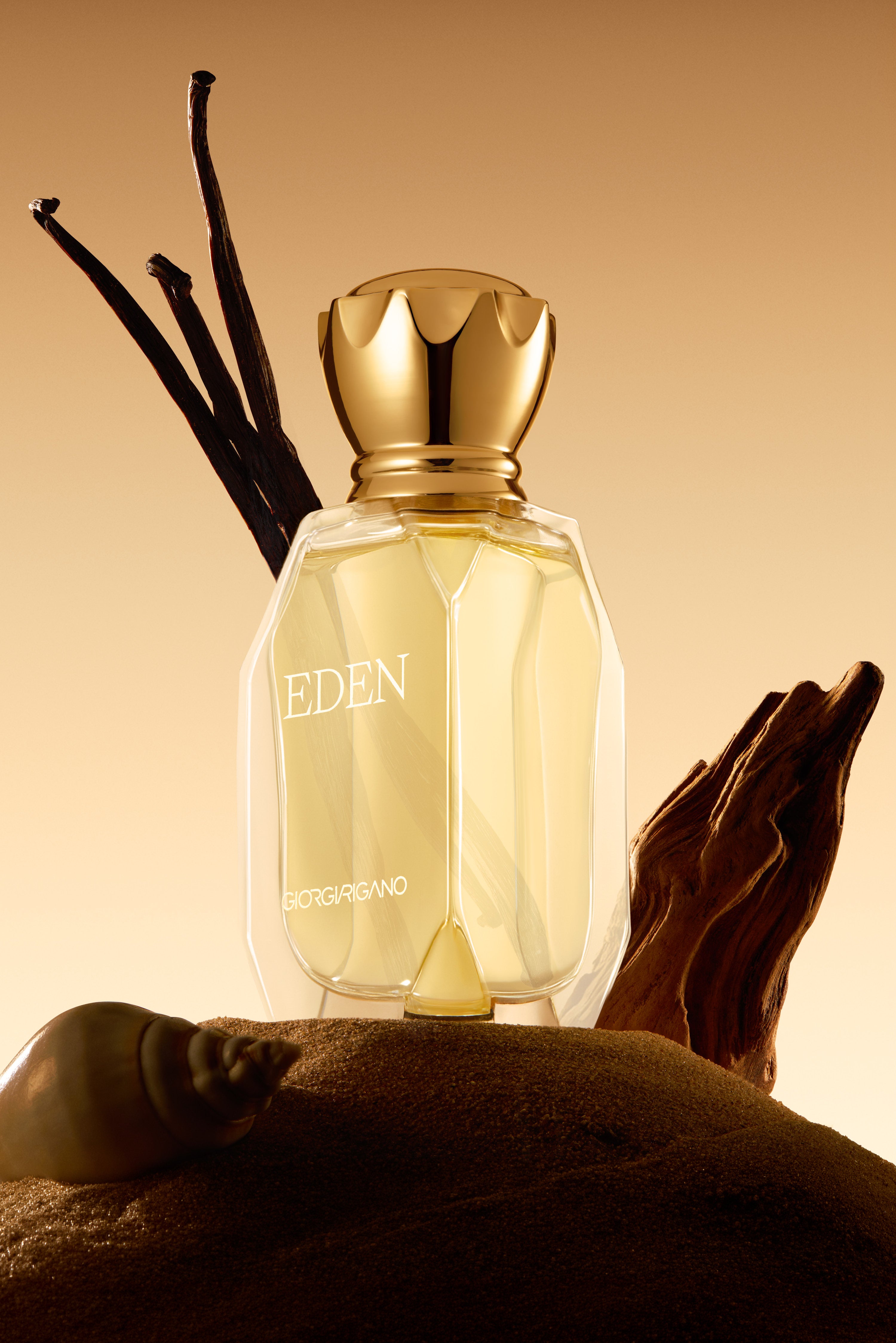
Eden
Orchid, vanilla, sweet woods. Soft and radiant, for the light of the morning.
CHF 99.90

Eden Rouge
Cinnamon, jasmine, caramel. Warm and magnetic, for the evening.
CHF 109.90

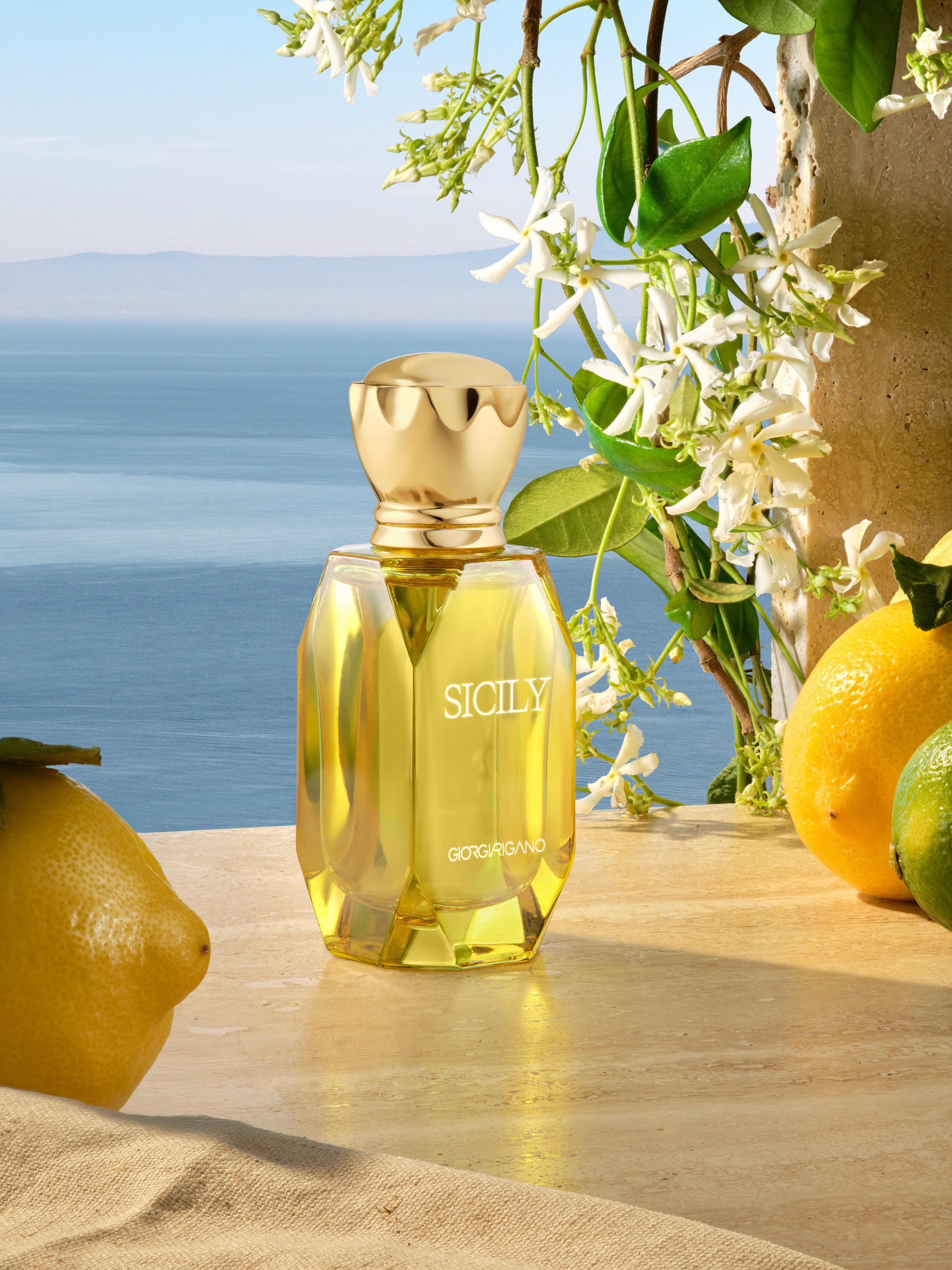
Sicily
Lemon, jasmine, cedarwood. Bright and Mediterranean: on the hair, its citrus lifts every time you move.
CHF 99.90

Sahar
Oud, amber, benzoin. Deep and enveloping, for the last hour of the night.
Sold out
Frequently asked questions
Is bakhoor the same as oud?
Not exactly. Oud is the agarwood itself, as chips or as distilled oil. Bakhoor is a blend: wood, often oud or sandalwood, soaked in perfumed oils and mixed with resins and other aromatics.
Can you burn bakhoor without charcoal?
Yes. An electric burner warms the bakhoor without a flame. It is simpler to use indoors and adds no charcoal smoke.
How much bakhoor should I use?
Very little. One chip, or a fingertip of powder, perfumes a room. Add more only if the scent fades.
Can you put bakhoor smoke on your hair?
It is a traditional gesture. Hold the burner below the lengths, briefly and at a distance: the smoke should feel warm, never hot. For every day, a fragrance made for hair gives the same trail with no flame.
How long does the scent of bakhoor last?
In a room, until the air changes. On clothes and hair, much longer, because fibres hold the scent and release it slowly. Exactly how long depends on the blend and on the fabric.
Is burning bakhoor safe?
Treat it like any incense: on a heat-proof surface, never unattended, with good ventilation and in short sessions. If someone at home has asthma or another lung condition, burn it while they are away.
What does bakhoor smell like?
Warm, woody and smoky, with a resinous depth. Beyond that, it depends on the blend: rose and musk make it soft and floral, amber and resins make it rounder and sweeter, pure oud keeps it dark and earthy.
Sources
- Visit Qatar, Bukhoor
- Gulf News, The Emirati ‘house smells’: why oud, bukhoor and gahwa can never be replaced, 2026
- Gulf News, The art of knowing when a visit is actually over, 2026
- Khaleej Times, On the bukhoor trail
- Khaleej Times, An ode to the oud: the scent of Arabia
- Kuwait Times, The timeless aroma of bukhoor in Kuwaiti culture
- Merriam-Webster, Oud
- Andariya, Sudanese incense industry: women’s attempt to save their families and cultural heritage
- Wikipedia, Dabqaad
- The Star (Kenya), How to burn uunsi (incense) at home, 2024
- Unruly, Before the Bottle: Africa’s Long History with Fragrance, 2026
- My Gambia, Churray: The Scent of Culture
- Reuters via Yahoo News, Yemeni women find a lifeline in selling incense
- Naziz, Das, Sen, The Scent of Stress: Evidence From the Unique Fragrance of Agarwood, Frontiers in Plant Science, 2019
- Encyclopædia Britannica, Perfume
- UNESCO World Heritage Centre, Land of Frankincense
- Wikipedia, Land of Frankincense
- American Lung Association, Incense burning dangers, 2026
- Photos: Miftah Dudung, M Sohaib on Unsplash; aboodi vesakaran on Pexels